
We do not aggregate logos. The companies we back have found their first market and are confronting the harder problem. Company details surface here as approvals are confirmed. We do not list companies before they have chosen to be public.
Portfolio volatility is part of the journey. What matters is whether we are useful when it counts.

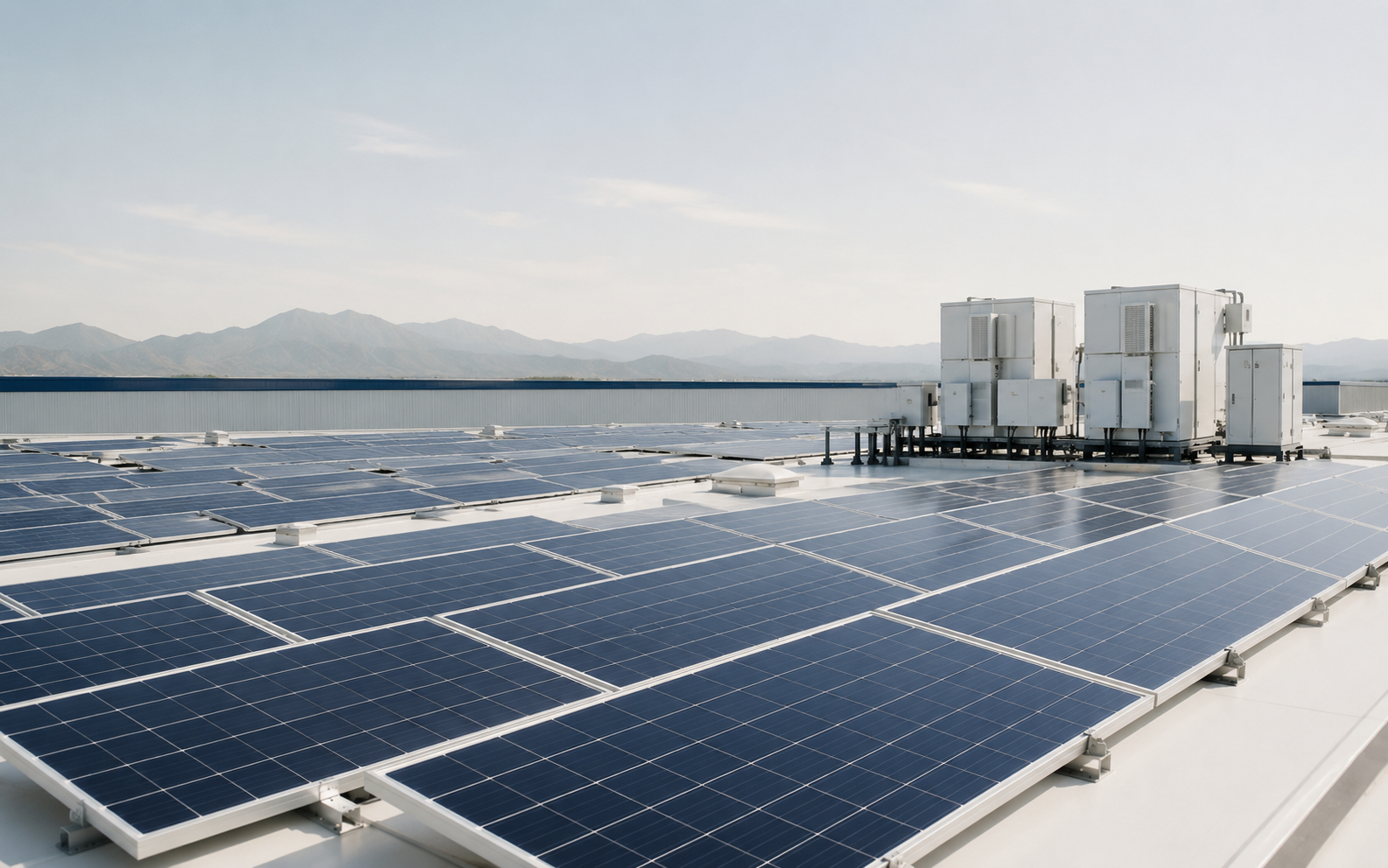
GH2 Solar · Green Hydrogen Infrastructure
Backed before the market narrative became crowded.
The inflection we tracked
The inflection we were tracking: when policy alignment, cost curves, and demand pressure reached a point where the business case no longer required the market to be convinced. India's industrial decarbonisation created a window where the three variables moved simultaneously. We were in before the window was obvious.
What gave us conviction
Validated order book before the capital markets had priced the category. A revenue base that validates the demand thesis. A management team that treats project finance as a core capability, not a capital-raising exercise. The company was backing operational infrastructure, not a technology demonstration.
Where the company stands
The company is now in the infrastructure scaling phase, where the first project's economics become the template for the next. Approaching public markets readiness. The kind of infrastructure execution that compounds over time. We expect the work between here and a public pathway to be the most consequential phase of the investment.
[Full case study available to LPs and qualified investors.]
Two more companies are in pipeline, yet to make a press release.
One standard across all four sectors: the operating constraint has to be nameable before we price a round.
Project economics, regulatory sequencing, and financing structure have to move in the same direction. A project that works technically can still fail if the debt path closes before the offtake is signed. That failure is usually irreversible.
signed demand commitments, a credible path to project debt, a project timeline with built-in buffer, and the assumptions that break first if timelines move.
A working technical system is not a repeatable commercial system. The structural bottleneck is almost always one of three things: manufacturing reliability at the volumes the plan requires, implementation burden per customer, or sales repeatability without the founder in the room.
field deployment reliability data, average implementation time and cost per customer, and evidence that sales has closed at least one cycle without founder force.
Growth can hide poor channel quality until the company is already committed to the wrong motion. The moment a founder steps back from the sales process is when unit economics get honest. By then, the wrong channel structure is already baked in.
retention curves by acquisition channel, SKU-level contribution margins, cohort behavior in the second and third market, and what changed in channel mix when the founder was not closing deals.
Most AI products have strong launch weeks and weak month-six cohorts. Retained workflow value is different from demonstrated capability. The companies that compound are the ones where customers build the product into their operating process, not the ones with the strongest demo.
account-level usage at six and twelve months, implementation depth and time-to-value per account, expansion logic, and the reason customers renew without founder involvement.
Real operating situations from current portfolio work. Company names withheld.
A company at ₹200 Cr in revenue was running sales and delivery on infrastructure designed for ₹50 Cr. The org had scaled headcount without scaling systems. The fix was rebuilding the commercial operations layer, not the product or the team, before the next growth phase was accessible.
A company with a working field system had closed its first three customers through founder-led sales. The fourth and fifth required the same process but the founder was now three layers removed from it. The sales architecture had to be rebuilt around the technical deployment process, not around the founder's relationships.
An infrastructure company entered commissioning with a capital structure built for one timeline and a build-out reality that required another. The gap between financial close and first revenue was longer than modelled. Managing that gap required a specific kind of investor involvement: practical working capital support, not cheerleading.
Hiring diagnostic
Org structure at the current stage vs. what the plan requires, and where the first break will appear. Not a headcount review. A systems review.
Go-to-market teardown
Channel mix, retention by acquisition source, and what founder dependency looks like in the numbers. The moment the founder steps back is when cohort behavior gets honest.
Working capital review
Cash requirements of the growth plan, the financing path the company is committing to, and where working capital becomes the binding constraint. Practical support from people who have navigated the same situations.